



Shoe Covers
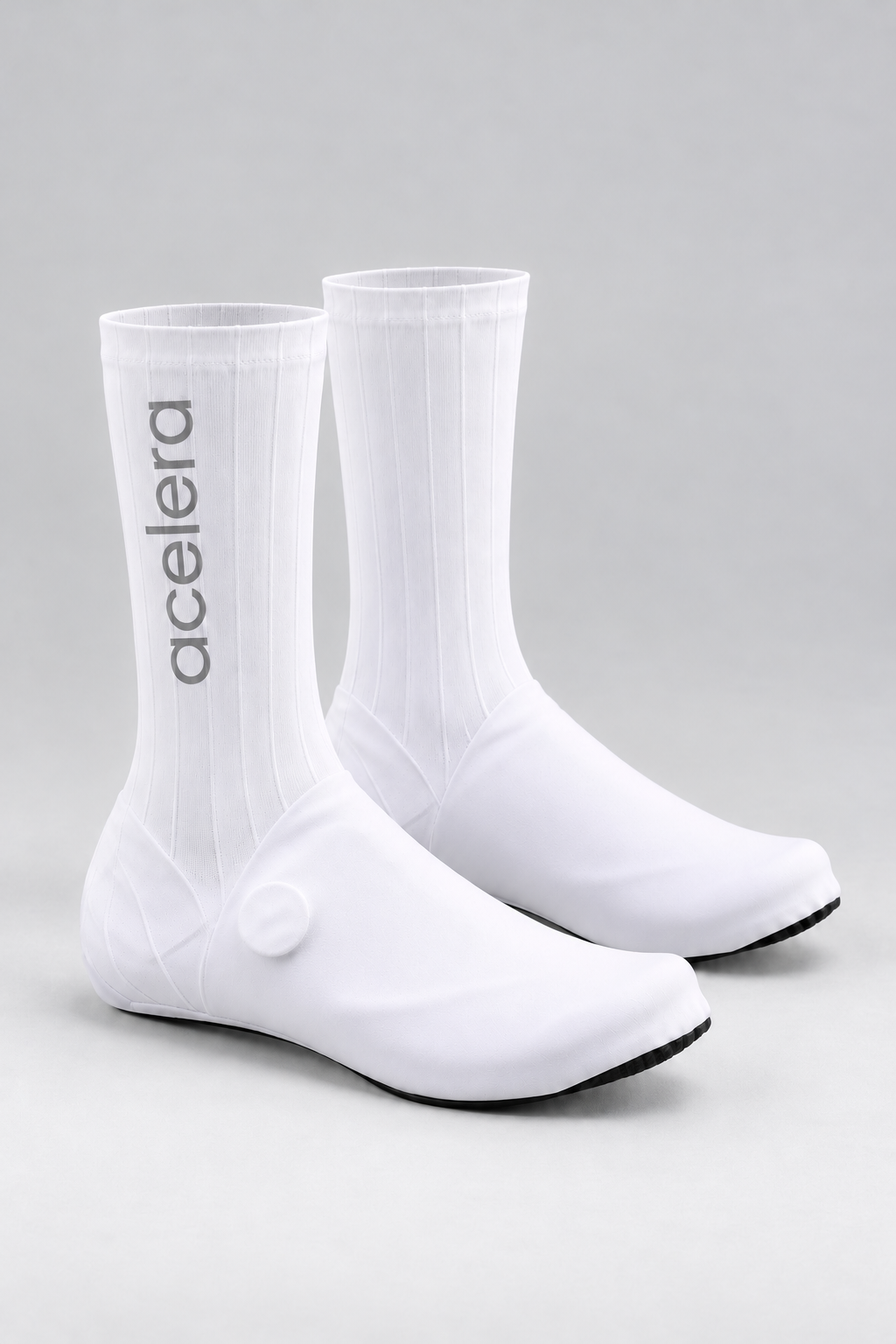
Cycling overshoes keep road spray, rain and cold wind away from your shoes, so your feet stay warmer and drier for longer. Choose the Regular shoe covers for wet and windy rides in spring and autumn, from about 0 to 20°C. On the coldest days, wear the winter shoe covers, made for snow and icy conditions. Both wrap tightly around your shoe, stay in place with a silicone gripper and work with all types of cycling cleats.
Sort by
1 product
Why wear overshoes on the bike
Your feet take the worst of the weather, as they sit low, right behind your front wheel, and catch every bit of spray from the ground. On top of that, most cycling shoes are built with vents and mesh to keep you cool in summer. That’s great in July, but in October it means cold air and water go straight to your toes.
Shoe covers close that gap, block the wind, keep the road spray out and protect your shoes from mud and grit, so your feet stay comfortable long after they’d normally go numb.
To be clear: no overshoe keeps your feet completely dry on a long ride in heavy rain. Water eventually finds its way in through the cuff and the cleat opening. What a good pair does is slow that down a lot and keep the cold wind off, and that’s what keeps your feet warm.
Regular or winter shoe covers
Regular shoe covers for rain and wind
These are made for wet and windy rides in spring and autumn, from about 0 to 20°C, from the daily commute to the weekend training ride. What you can expect:
- Water and windproof lower section: blocks road spray and cold wind where your feet need it most.
- Breathable upper section: lets heat out, so you don’t end up with sweaty feet.
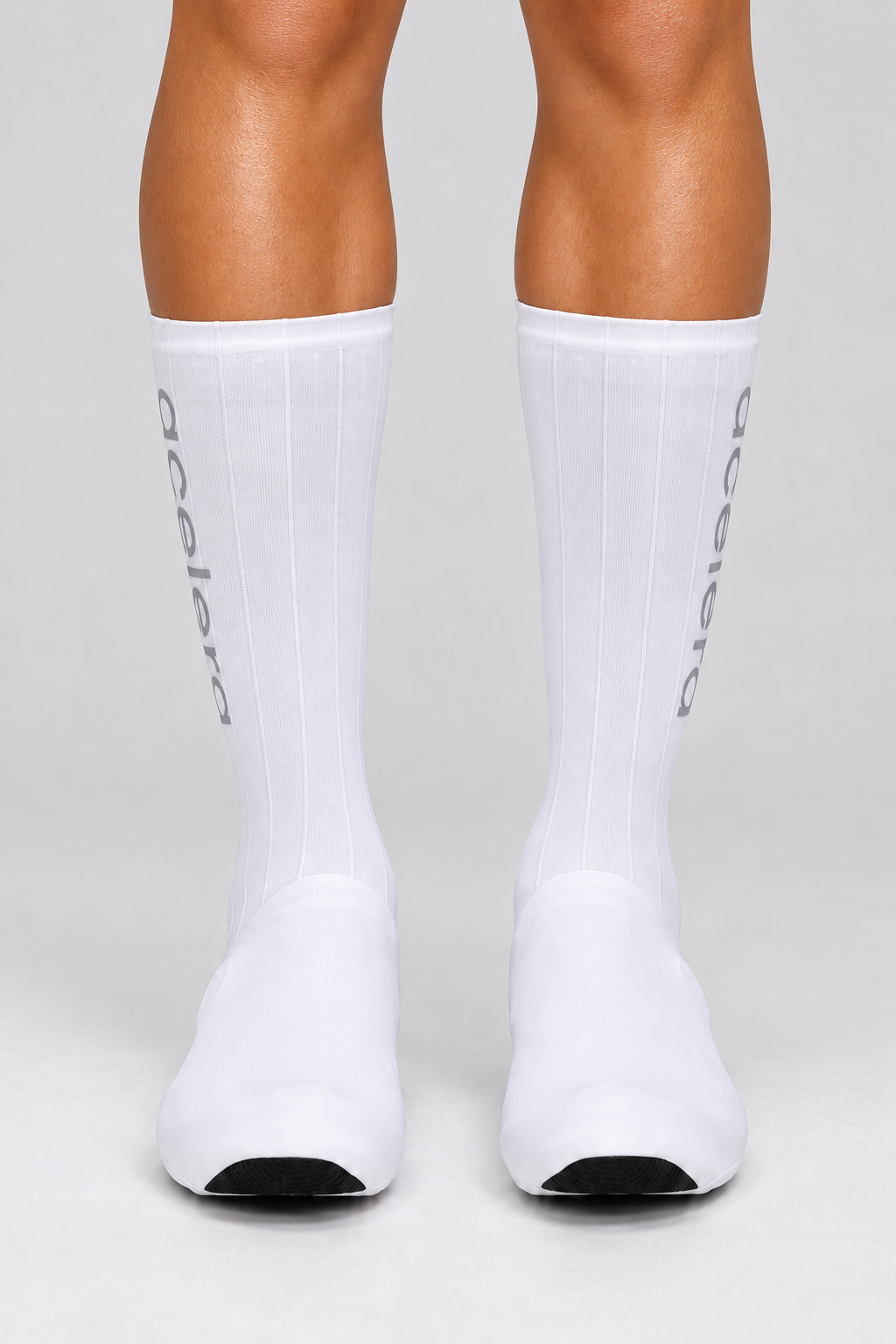
- Regular stretch fabric: wraps tightly around your shoe for a smooth fit that reduces drag on every pedal stroke.
- Silicone gripper and velcro strap: keep the cover in place around your ankle and close it neatly around your cleat.
- Reinforced sole area: made with abrasion-resistant material where overshoes usually wear first.
Winter overshoes for cold days
These are for the days when the temperature drops towards freezing and your toes go numb in the first half hour. The winter overshoes are made for -5°C to 15°C. Here is what you can expect:
- Thicker fabric for better insulation
- Waterproof and windproof material
- Easy closure to put them on and off
Not sure which one you need? If it’s above about 5°C and wet, go for the Regular shoe covers. If it’s colder, or you’re out for hours in the cold, choose the winter overshoes.
When to wear cycling shoe covers
- Cool and dry: wear the Regular shoe covers on chilly mornings to keep the wind off your toes.
- Wet roads: wear overshoes as soon as the roads are wet, even if it isn’t raining. Spray from the front wheel soaks your shoes faster than the rain does.
- Cold winter rides: around freezing, or on long rides in the cold, switch to the winter overshoes.
Overshoes are one part of a winter setup. Combine them with good cycling socks, long cycling tights (men’s) and a base layer (men’s) and a deep winter jacket (men’s), to keep riding all winter.
How to put on overshoes
Overshoes are easiest to put on with your cycling shoes already on your feet.
- Pull on your tights and socks first.
- Put on your cycling shoes and fasten them.
- Pull the overshoe over the toe of your shoe and stretch it back over the heel.
- Line up the opening under the sole with your cleat and close it.
- Pull the cuff up and let the silicone gripper sit snugly around your ankle.
In heavy rain, pull your tights down over the cuff. Water then runs down the outside of your leg instead of into your shoe.
Sizing and care
Overshoes should fit snugly just like a sock. A loose cover lets water in and can flap against your cranks. The Regular and winter shoe covers come in S/M M/L L/XL.
To make them last:
- Walk as little as possible in them. Café floors and gravel wear down the sole area fastest.
- Rinse off mud and grit after a wet ride.
- Let them air dry. Don’t dry them on the radiator or in the tumble dryer.
Frequently asked questions
Do cycling overshoes keep your feet dry?
They keep your feet a lot drier and warmer, but no overshoe stays completely watertight on a long ride in heavy rain. Water eventually gets in through the cuff and the cleat opening. Pulling your tights over the cuff helps.
At what temperature should I wear overshoes?
The Regular shoe covers are suitable from about 0 to 20°C and are ideal for wet autumn and spring rides. For colder days, choose the winter overshoes.
Do the overshoes work with all cleats?
Our shoe covers fit around all types of cycling cleats and close neatly with a velcro strap under the sole.
Can I walk in cycling overshoes?
Short walks to the café are fine, but keep walking to a minimum, because the sole area is where overshoes wear out first.
STAY UP TO DATE
Sign up for the Acelera Newsletter